


Wisdom tooth surgery is routine, yet the first few days can still feel rough: swelling, a stiff jaw, and soreness that makes eating a chore. Most recoveries go smoothly when you protect the blood clot, manage swelling early, and keep the mouth clean without disturbing the surgical sites. If your dentist or oral surgeon has given you specific instructions, follow those first.
If you’re reading this while looking to remove wisdom teeth in Sydney, the same practical question usually comes up: what should you do in the first 72 hours?
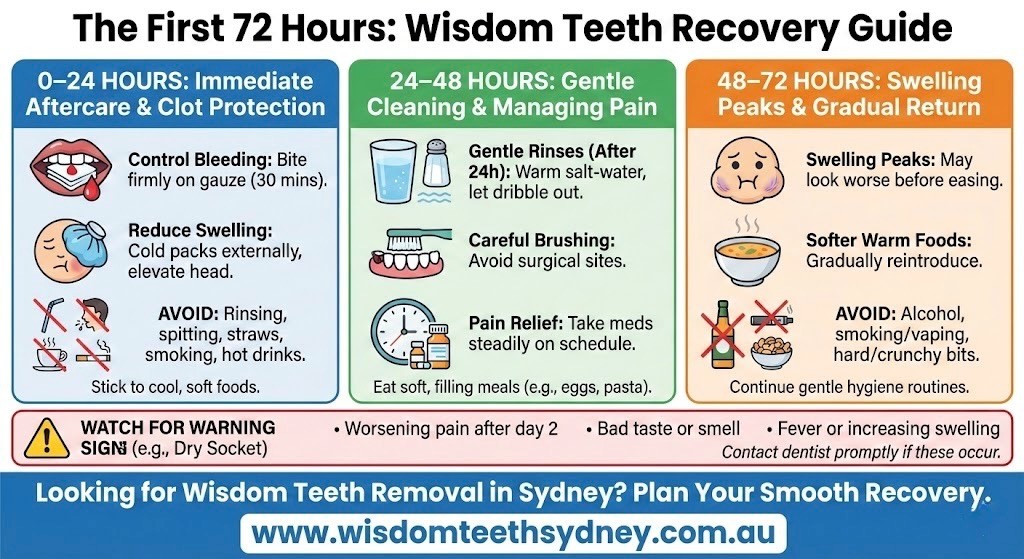
The three-day plan at a glance
| Time window | Do | Avoid |
| 0–24 hours | Gauze pressure, rest, cold packs, cool soft foods | Rinsing/spitting, straws, smoking, hot drinks |
| 24–48 hours | Gentle salt-water rinses (if advised), careful brushing, soft filling meals | Crunchy foods, heavy exercise, picking at the socket |
| 48–72 hours | Keep up gentle hygiene, gradually return to softer warm foods | Alcohol, smoking/vaping, foods with small hard bits |
0–24 hours: control bleeding and let the clot settle
Your dentist will usually place gauze over the extraction site. Bite down firmly for about 30 minutes. If bleeding continues, replace the gauze and apply steady pressure again. A light ooze (pink saliva) can last for a while.
For the first 24 hours, avoid rinsing. Public dental aftercare guidance notes that early rinsing can disturb the clot. Skip mouthwash, don’t swish drinks around, and avoid forceful spitting. If saliva builds up, let it dribble into a tissue.
Swelling often builds over the first two days, so cold packs are useful on day one. Use an ice pack on the cheek in short sessions with breaks. Rest with your head slightly elevated.
If you’ve just had wisdom teeth removal in Sydney, eat only once the numbness wears off so you don’t bite your cheek. Keep foods cool and soft and avoid anything piping hot.
Pain relief: keep it steady
The NHS lists paracetamol or ibuprofen as common options for pain after wisdom tooth removal, if suitable for you. If you were prescribed stronger pain relief, take it exactly as directed and avoid alcohol or driving if it makes you drowsy.
People often ask about value while they’re sore and sleep-deprived, especially if they’re also trying to make sense of wisdom teeth removal cost in Sydney. Keep the focus on recovery first: take medicines on schedule, eat soft meals before doses where appropriate, and don’t “save” tablets for later by waiting until pain is intense.

24–48 hours: gentle cleaning, better eating
Day two can bring peak tightness. Pain and swelling are common, particularly in the first couple of days.
This is when gentle cleaning starts to help:
- Brush the rest of your teeth as normal, but keep away from direct scrubbing of the sockets.
- After 24 hours, many patient leaflets recommend warm salt-water rinses. Do it lightly (no vigorous swishing) and let the water fall out.
Food can still be soft but more filling: eggs, tofu, dhal, pasta, soft fish, and well-cooked rice. Drink water regularly.
48–72 hours: swelling peaks, then starts to ease
Many people look more swollen on day three than day one. That can still be normal, and bruising along the jaw can appear. Keep up gentle rinses after meals and continue careful brushing.
If you’re comparing quotes and seeing big ranges in wisdom teeth removal price in Sydney, keep in mind that complexity and sedation needs can change the recovery plan too (for example, you may feel more tired after certain anaesthetics). Your surgeon’s instructions should always guide what you do day to day.
Dry socket and other warning signs
Dry socket is a painful complication where the clot is lost or breaks down and the underlying bone and nerves are exposed. Dry socket pain often begins one to three days after extraction.
Contact your dentist promptly if pain worsens after the second day, spreads toward the ear, or comes with a bad taste or smell. Experts also advises seeking care if you develop new pain or pain that gets worse after tooth removal.
Seek urgent help if you have fever, pus, swelling that keeps increasing, heavy bleeding that won’t settle with pressure, or trouble breathing or swallowing.
A simple first-72-hours checklist
- Gauze pressure for bleeding, as instructed
- Cold packs on day one; rest with your head elevated
- No rinsing for 24 hours, then gentle warm salt-water rinses after meals
- Soft foods; avoid straws and smoking/vaping
- If you’re budgeting for the cost of wisdom teeth removal in Sydney, plan ahead for a few days of soft groceries and time off work or uni.
Choosing a dental care provider for wisdom teeth removal
If you’re booking care, ask what support looks like if pain spikes after day two and whether sedation options are available.
Fees vary by complexity, number of teeth, imaging, and whether sedation or hospital theatre time is involved. When you’re weighing up cheap wisdom teeth removal in Sydney against other options, check what’s included (consultation, X-rays, surgical fees, medicines, reviews) and ask for a written quote.
Some clinics promote affordable wisdom teeth removal in Sydney through payment plans, which can be useful if you prefer predictable repayments. The safest choice is the one that matches your clinical needs and gives you clear after-hours instructions, not the one with the lowest headline number.
Also Read: From Consultation to Recovery: A Step-by-Step Guide to Wisdom Teeth Removal
Frequently Asked Questions:
1. When can I return to work or uni after wisdom teeth removal?
Many people manage desk-based tasks after two to three days. Physical work may need longer.
2. What if food gets stuck?
Don’t poke the socket. Use a gentle warm salt-water rinse after 24 hours and follow any flushing instructions from your dentist.
3. Can I smoke or vape after the extraction?
It’s best to avoid smoking in the early healing period because it can raise the risk of infection and can interfere with the clot that protects the socket.
4. When can I exercise again?
Plan on resting for at least the first 24 hours. After that, keep activity light and build back gradually, as heavy exercise can increase bleeding and may disturb the clot. If your extraction was complex or you had sedation or a general anaesthetic, your clinician may want you to take a longer break.
5.What if my stitches feel odd, or I still have numbness after a day?
Dissolving stitches are common and usually break down on their own. Mild tingling as the anaesthetic wears off is expected, but numbness or altered sensation that lasts beyond the first day should be monitored. Nerve effects can occur and often improve, though they can last weeks or months in some cases. If sensation is not improving, contact your dentist or surgeon.