


If you have had a wisdom tooth out, it can be unsettling to look in the mirror and see a hollow area, pale tissue, or food catching where the tooth used to be. Many people worry they have done something wrong, especially in the first week.
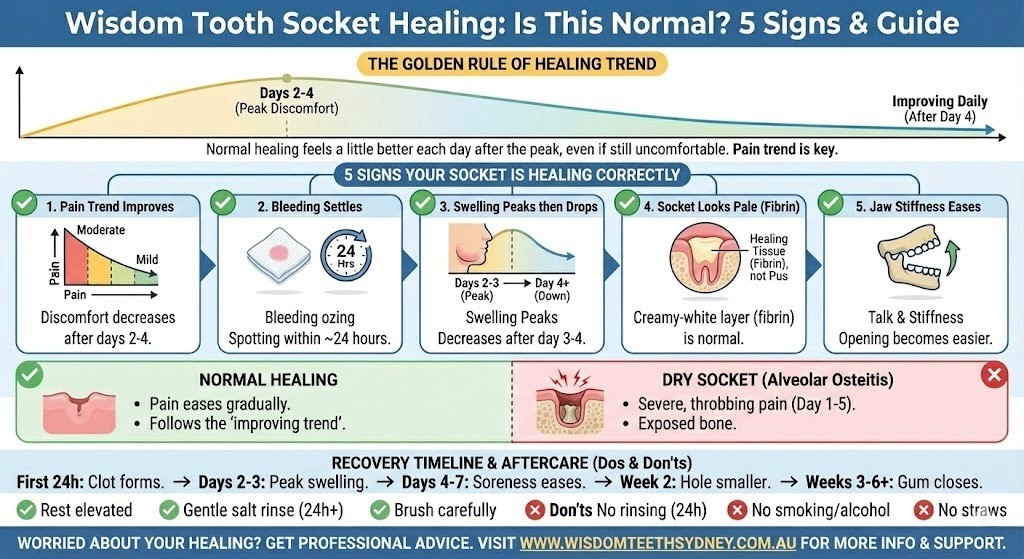
Most sockets look and feel “odd” early on, yet still heal normally. A helpful rule is this: normal healing tends to feel a little better each day after the first few days, even if it is not comfortable yet. Pain and swelling often peak around day 2–4, then begin settling.
If you are planning or recovering after wisdom teeth removal in Sydney, the guide below outlines what “normal” often looks like, what changes deserve attention, and when it is sensible to call your dental team.
The normal healing timeline
Everyone heals at a different pace, and lower wisdom teeth often take longer than upper teeth. Still, this broad timeline is common:
- First 24 hours: A blood clot forms; light oozing can occur. Avoid rinsing during this period so the clot can settle.
- Days 2–3: Swelling and tightness commonly peak.
- Days 4–7: Soreness should begin to ease; the socket starts filling with healing tissue.
- Week 2: Many people find eating and talking are easier and the “hole” looks smaller.
- Weeks 3–6+: The gum continues closing over; deeper bone healing carries on for much longer beneath the surface.
If you are comparing clinics for wisdom Teeth in Sydney, ask what recovery milestones they expect for your specific extraction (simple vs impacted), because that shapes how long the site may look open.

The 5 signs your socket is healing correctly
1) Pain is improving overall (even if it still aches)
A dull ache, tenderness when chewing, and mild jaw soreness are expected. The key sign is the trend: after the first few days, discomfort should gradually reduce. If pain, swelling, or bleeding gets worse again after about four days, contact your clinician.
2) Bleeding settles to light spotting within about 24 hours
Pink saliva and minor oozing can happen on day one. Biting on gauze is commonly advised right after the extraction to help control bleeding. If bleeding is heavy or persistent despite pressure, that is not typical.
3) Swelling peaks around days 2–3, then starts to go down
Swelling is your body’s response to tissue injury. It often looks worse before it looks better, especially around the second or third day.
If swelling keeps increasing after day 3–4, becomes hot and red, or comes with fever, seek advice promptly.
4) The socket looks pale (white or yellow) as healing tissue forms
People often worry that a creamy-white or yellowish layer means infection. In many cases it is part of normal healing (protective fibrin and early healing tissue), especially when pain and swelling are settling. The concern is thick pus-like discharge, worsening pain, or a spreading bad taste.
5) Jaw stiffness slowly improves and you can open wider each day
Tight jaw muscles are common after wisdom tooth surgery. A good sign is that talking, yawning, and opening your mouth become a bit easier as the week goes on. If you cannot open at all, or it worsens rather than improves, call your dentist.
Normal healing vs dry socket
Dry socket (alveolar osteitis) can happen when the clot is lost and bone is exposed. It is known for intense pain rather than mild soreness.
Normal healing often looks like:
- Pain gradually easing after the first few days
- Mild odour/taste that fades with routine hygiene
- A socket that may look pale as it heals
Dry socket is more likely when you notice:
- Severe, persistent throbbing pain within 1–5 days of extraction, sometimes radiating to the ear or eye
- Bad breath or a strong unpleasant taste
- A socket that looks empty or shows exposed bone
If you suspect dry socket, it is worth calling your clinic the same day. Treatment is usually straightforward and can make a big difference to comfort.
What should a healing socket look like?
- “Why does it still look like a hole?”
The gum closes from the edges inward, so a shallow opening can remain for a while, especially in the lower jaw.
- “Is white stuff normal?”
Often, yes, if symptoms are improving and there is no increasing swelling or discharge.
- “What about food stuck in there?”
Small bits can lodge in the opening once you return to more solid foods. Gentle rinsing after 24 hours can help, but forceful swishing can disturb healing.
What to do to support healing (and what to avoid)
Do
- Rest with your head slightly elevated for the first day if you are still oozing.
- After 24 hours, rinse gently with warm salt water (commonly half a teaspoon in a glass of lukewarm water).
- Brush other teeth as normal while being careful around the extraction site.
Avoid
- Rinsing during the first 24 hours.
- Smoking and alcohol in the early healing phase (both raise complication risk and slow recovery).
- Straws or strong suction, and spitting forcefully.
People often search for budget options like cheap wisdom teeth removal in Sydney, yet aftercare is not the place to cut corners. Follow the written instructions you were given, and ring the practice if something feels off.
When it’s not normal: call your dentist
Get advice if you notice:
- Pain that worsens after day 3–5, or severe pain with bad breath or taste
- Swelling that keeps increasing after day 3–4, or fever
- Heavy bleeding that does not settle with firm pressure
- Numbness that does not start improving
- Trouble swallowing or breathing (urgent care)
If you are weighing wisdom teeth removal cost in Sydney or wisdom teeth removal price in Sydney, also ask what post-op support is included. Easy access to follow-up advice matters when symptoms change.
Also Read: Dry Socket Explained: Risk Factors, Early Signs & At-Home Care Before Your Review Visit
Frequently asked questions
1. How long does pain last after wisdom tooth removal?
Many people feel the worst soreness in the first few days, then improve steadily. Pain that ramps up again after around day four should be checked.
2. When can I start rinsing?
Experts always suggest that you avoid rinsing for 24 hours, then begin gentle salt-water rinses.
3. Is a bad taste normal?
A mild taste can happen, especially with soft foods and reduced brushing near the site. A strong bad taste with severe pain can signal dry socket or infection and needs review.
4. Why is my socket white or yellow?
Often it is normal healing tissue, especially if soreness is easing. Thick discharge, worsening swelling, or fever are not typical.
5. When can I eat normally again?
Most people move from very soft foods to more normal textures over the first week, guided by comfort. Chew away from the extraction side at first.
6.Do I need antibiotics?
Not always. Your dentist decides based on your procedure and risk factors. If you feel unwell or swelling increases, call your clinic.
The bottom line
A healing wisdom tooth socket rarely looks “neat” in the first week. Look for steady improvement: bleeding settling early, swelling peaking then easing, and pain becoming more manageable. If symptoms are getting worse instead of better, it is sensible to contact your dentist.
If you are comparing providers and wondering about the cost of wisdom teeth removal in Sydney or looking for affordable wisdom teeth removal in Sydney, keep recovery advice in the decision too. Clear post-op instructions and accessible follow-up can make the whole experience smoother.