


Nausea after dental surgery can feel like an added insult when your jaw is sore and your mouth tastes faintly of antiseptic. Still, vomiting after wisdom teeth removal is often a short-term reaction rather than a sign that something has gone badly wrong. If you have just removed wisdom Teeth in Sydney, the key is to steady your stomach while protecting the healing sockets.
Why vomiting can happen after an extraction
A few common triggers tend to overlap in the first 24 hours:
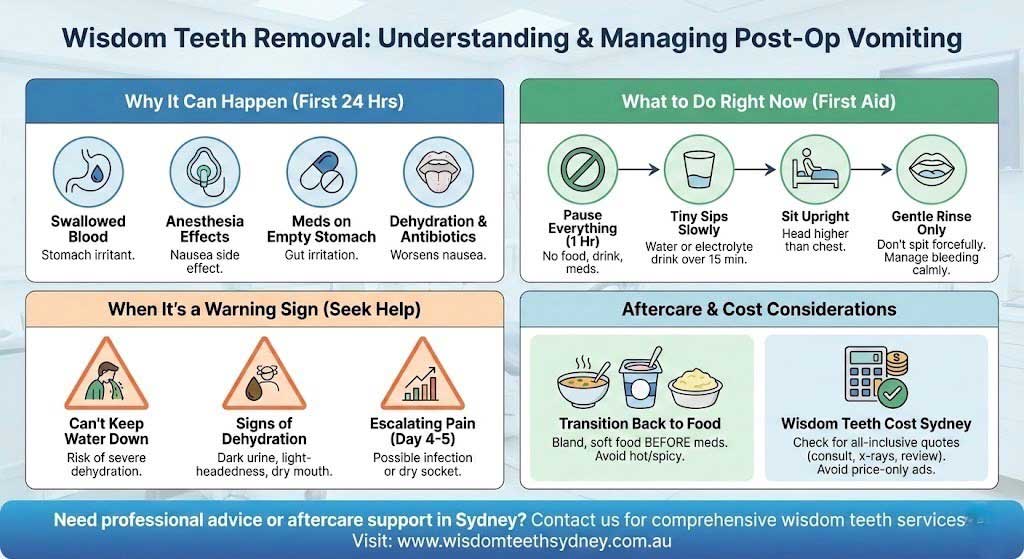
- Swallowed blood. Even with careful suctioning, a small amount of blood can trickle down the throat during and after surgery. Some oral surgery experts note that the stomach may not tolerate swallowed blood well, which can lead to vomiting.
- Sedation or general anaesthetic effects. Postoperative nausea and vomiting is a known side effect of anaesthesia. Research reviews commonly report that it can affect around 20% to 30% of patients after general anaesthesia, and up to 30% with inhalational agents when no preventive medication is used.
- Pain relief on an empty stomach. Stronger analgesics can be rough on the gut, especially without food. Experts often warn that taking pain medication on an empty stomach can increase nausea and vomiting.
- Antibiotics and dehydration. Some antibiotics irritate the stomach, and dehydration can make nausea linger. Once you have vomited, it is easy to fall behind on fluids, which then worsens dizziness and queasiness.
So, is it “normal”? It can be, particularly on the day of surgery. Repeated vomiting, severe bleeding, or symptoms that escalate are a different story and deserve prompt medical advice.

What to do right now (first aid at home)
The aim is to settle your stomach without disturbing the blood clot that protects the socket.
1) Pause everything for a short while.
Avoid food, drink, and medications for about an hour after vomiting. This gives your stomach a chance to settle.
2) Start with tiny sips.
After that pause, begin with small sips of water or an electrolyte drink, taken slowly. Sip over about 15 minutes rather than drinking quickly. Sit upright and keep your head higher than your chest.
3) Don’t rinse hard or spit forcefully.
After vomiting, you may want to wash your mouth out straight away. Resist vigorous swishing. A gentle, small rinse with plain water is usually enough to freshen your mouth without creating strong suction.
4) Manage bleeding the calm way.
If your mouth is bleeding, fold clean gauze, place it over the extraction site, and bite down with steady pressure. Swallowing blood can keep nausea going, so it is worth controlling oozing early.
5) Reintroduce bland food before tablets if you can.
Once the nausea eases, try a small amount of soft food such as yoghurt, smooth soup, mashed potato, or scrambled eggs. Then take your prescribed pain relief with that food, unless your clinician has told you otherwise. The “empty stomach” issue is a common reason people feel sick after extractions. If you are unsure which medication is upsetting you, contact your treating team before stopping anything. After wisdom teeth removal in Sydney, the clinic can often suggest a different pain plan or timing that is gentler on the stomach.
When vomiting is a warning sign
A single episode that settles is one thing. Ongoing vomiting is another, mainly because it increases dehydration risk and makes it difficult to take pain relief.
Healthdirect advises seeking medical attention if you cannot keep water down or you have signs of dehydration. Those signs can include very dark urine, light-headedness when standing, a dry mouth, or unusual sleepiness.
Also watch your pain pattern in the days after surgery. Pain that increases after around 4 to 5 days can suggest dry socket or infection and should be reviewed. Vomiting itself does not prove dry socket, but if severe pain appears alongside a foul taste or odour, arrange a prompt check.
Also Read: Key Signs of Infection After Wisdom Teeth Removal
How much does wisdom teeth removal cost in Sydney
People often start comparing fees while they are still deciding where to book, or after an unexpected follow-up visit. If you are looking up wisdom teeth removal cost in Sydney, remember that the total can depend on whether the teeth are impacted, whether you need surgical removal, what imaging is required, and what kind of sedation is used.
It is also worth separating marketing from the details. A headline wisdom teeth removal price in Sydney may not include consultation, x-rays, or a review appointment. Ask for an itemised estimate, and keep after-hours advice and follow-up support in mind as part of overall value.
Frequently Asked Questions:
1) How long does nausea last after wisdom tooth removal with sedation?
For many people, nausea is limited to the first day, especially if it is linked to sedation or swallowed blood. Sip fluids slowly and return to bland, soft foods as soon as you can. If nausea persists beyond 24 hours or worsens, contact your dentist, surgeon, or GP for tailored advice.
2) Can vomiting cause dry socket after wisdom teeth extraction?
Vomiting can create pressure in the mouth and may disturb the clot in the socket, which is why gentle mouth care matters. Avoid forceful rinsing, spitting, smoking, and straws early on. If pain becomes more intense after several days, or you notice a bad taste, book a review promptly.
3) What should I eat after vomiting following wisdom teeth removal?
Start with clear fluids in small sips, then move to bland soft foods: yoghurt, smooth soup, mashed vegetables, jelly, or scrambled eggs. Keep food cool or lukewarm and avoid spicy, greasy, or crunchy items until your stomach and jaw settle. Taking pain relief with food can also reduce nausea.
4) When should I seek urgent help for vomiting after wisdom tooth surgery?
Get medical advice the same day if you cannot keep water down, you are showing signs of dehydration, or vomiting keeps recurring. Seek urgent care for breathing difficulty, fainting, severe weakness, or heavy bleeding. Healthdirect lists “can’t keep water down” as a reason to seek immediate attention.
5) Is choosing affordable wisdom teeth removal in Sydney safe if I’m worried about aftercare?
Affordability can be reasonable, but check what is included and what support is available if complications arise. Ask whether the quote covers imaging, the type of extraction (simple vs surgical), sedation, and follow-up care. When people compare the cost of wisdom teeth removal in Sydney, make sure you are comparing like-with-like, not just the lowest advertised figure.
6) Should I trust ads for cheap wisdom teeth removal in Sydney if I had nausea last time?
Price-only advertising does not tell you how nausea is managed. If you have a history of postoperative nausea, ask about sedation options, anti-nausea medication, and after-hours contact. A clinic that plans for your risk factors can save you trouble later, even if the upfront quote is not the lowest.